
A night with consequences for the HELGES laboratory:
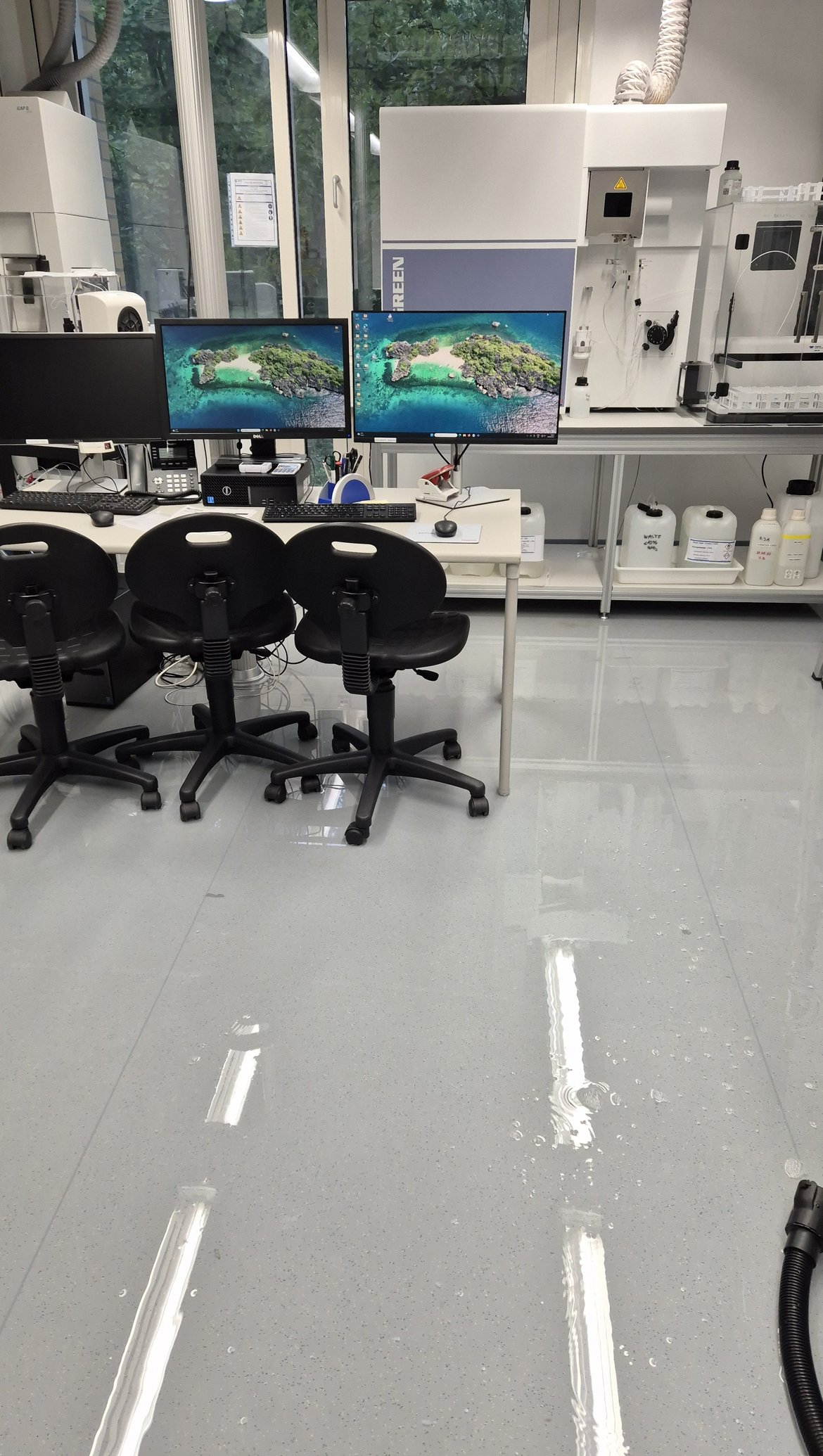
At the beginning of October 2025, an unexpected technical accident occurred in the ICP measurement laboratory in Building E (Level 2): During the night of Thursday, a water heater burst and released large amounts of water. It was a blessing in disguise: the incident occurred outside working hours and was discovered on Thursday morning—a decisive factor that prevented more serious damage. Employees from Department V4 immediately assessed the damage and classified it as urgent. The top priority was to protect the sensitive analytical infrastructure. (Picture 1)
Protection for highly specialized analytics
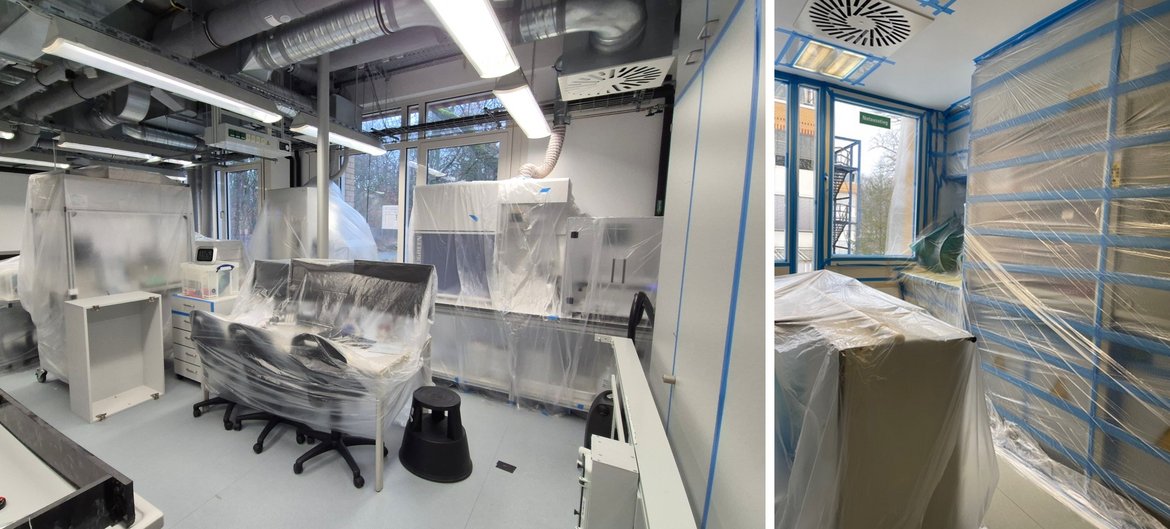
In the ICP laboratory, several drying holes were drilled as a first step to determine the extent of the water damage. However, it quickly became apparent that the moisture had already spread toward the adjacent cosmogenic nuclide laboratory—a class 10.00 clean room laboratory. After less than two weeks, mold had already formed on the wall in the weighing room, making it inevitable that both laboratories would have to be completely closed for renovation. (Picture 2)
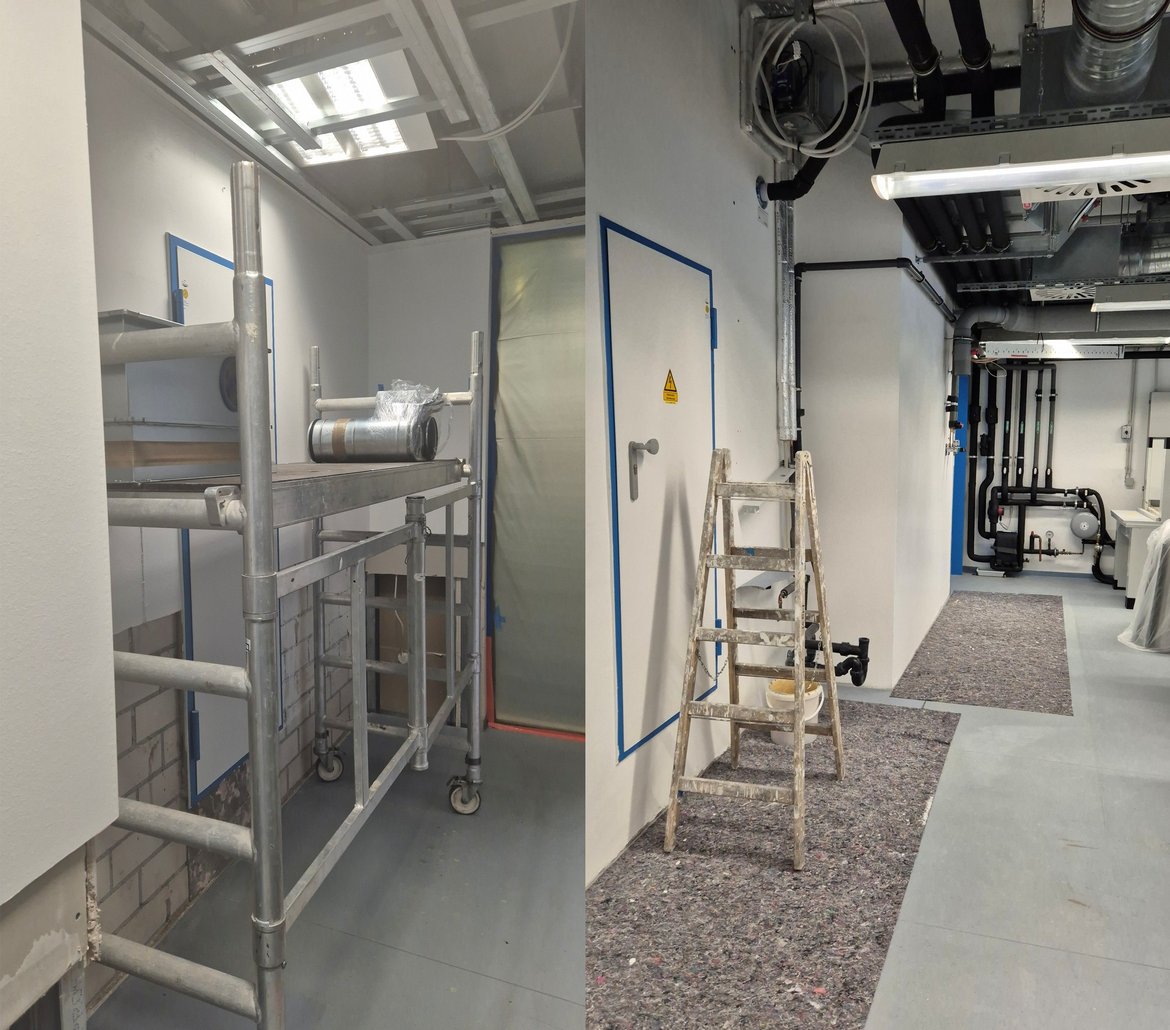
To protect the infrastructure, equipment was carefully wrapped in plastic and dust protection walls were erected. Parts of the lower wall areas had to be removed in order to carry out further drying measures — a particular challenge in a clean room that is supposed to be dust-free. (Picture 3)
Crisis used as an opportunity
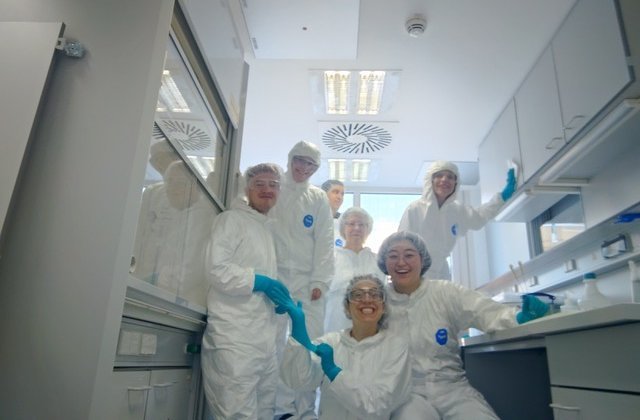
At the same time, the opportunity was taken to carry out work that had long been planned: fire dampers in the ceiling structure were replaced, thus avoiding further additional shutdowns at a later date. Thanks to the reliable and efficient organization by Doreen Klemmstein and Steffen Scholz (V4), the schedule was only delayed by a total of two weeks — mainly due to delivery bottlenecks for the required components. (Picture 4)
Back to routine
By mid-February, normal operations had largely been restored. However, extensive cleaning work was required beforehand to fully restore clean room conditions.
The users of both laboratories would like to express their sincere thanks to the staffof Department V4 as well as Josefine Holtz and Sebastian Focke (Section 3.2), who organized the renovation and implemented it with great dedication. (Picture 5)
An unexpected accident thus became an impressive example of efficient crisis management and cooperation—and of how quickly cutting-edge scientific analysis can be restored.