The planned phasing-out of lignite mining in Europe requires innovative, economic and climate-friendly strategies to sustainably shape the structural change for mining regions. In addition, the efficient storage of excess energy and waste heat plays a key role in future energy systems and energy supply security in Europe. The EU project TRIDENT is examining the technical feasibility and scalability of Pit Thermal Energy Storage (PTES) in former open-pit lignite mines. In this context, industrial excess heat and excess energy from renewable sources are stored seasonally in flooded mine pits and supplied via district heating networks. By integrating thermal energy storage technologies with heat and power generation, the utilisation concept envisaged in the TRIDENT project makes a significant contribution to the European Green Deal, while supporting economic development and labour market stabilisation in the related regions.
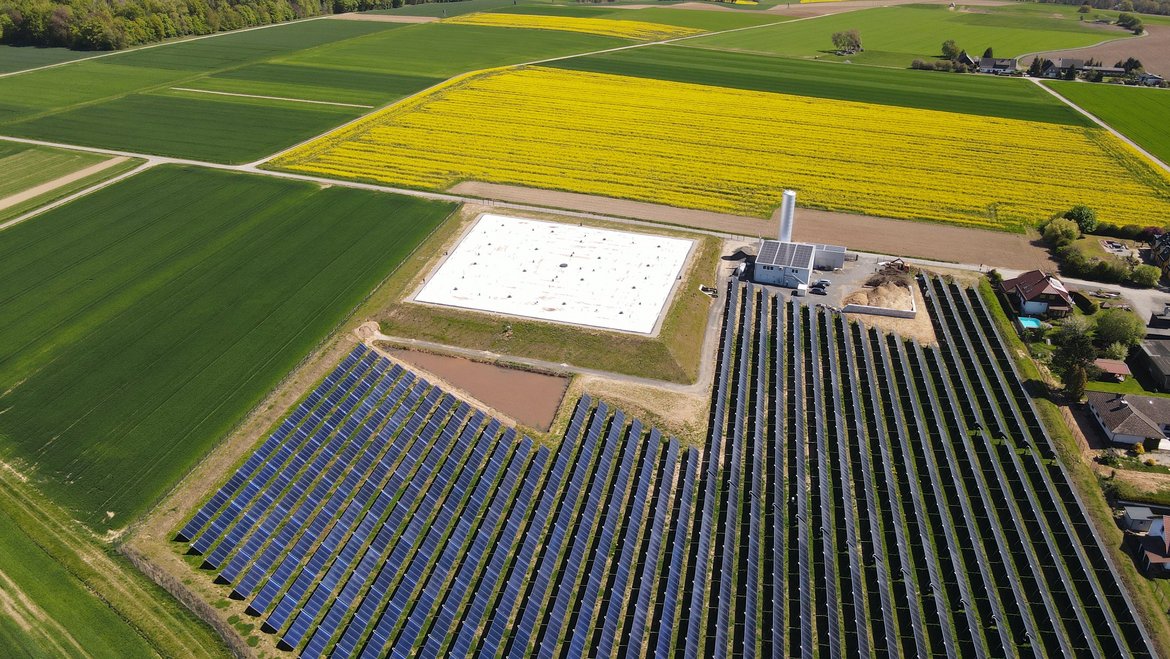
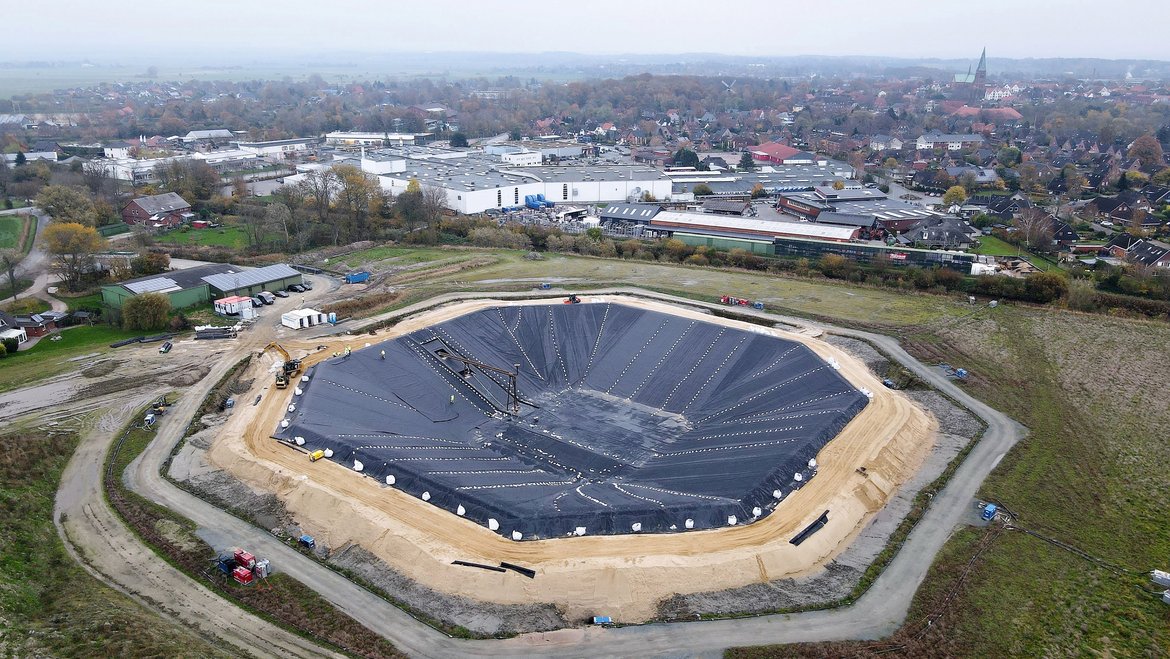
This builds on the experience gained from existing small-scale commercial PTES facilities in Meldorf and Bracht (Germany) as well as a PTES field laboratory in Rechlin (Germany). On this basis, the technology will be upscaled to the large-scale Bełchatów and Szczerców open-pit mines (Poland) - the largest open-pit mining complex in Europe covering more than 3,500 hectares with mining operations under valid lignite extraction licenses remaining in force until 2038. Numerical models addressing thermal stratification, heat losses and the impacts on groundwater and microbiology will be validated by dedicated field and laboratory experiments. An integrated environmental, socio-economic and technical risk assessment, together with an open-access and open-source simulation tool, will enable operators, mining authorities, developers and regulators to quantify the efficiency of installed and future PTES systems of various scales.
The EU project TRIDENT has a total financial volume of about 3.0 million Euros, of which about 1.8 million Euros are funded over a period of 3 years by the European Research Fund for Coal and Steel (RFCS). On this basis, ecologically and economically sustainable post-mining strategies for former open-pit lignite mines are being developed under the leadership of the GFZ Helmholtz Centre for Geosciences in Potsdam (GFZ) in cooperation with three further scientific institutions and four industrial partners from Germany, Poland and France.
"The main objective of TRIDENT is to develop an integrated technical and economic feasibility study for the utilisation of post-mining lakes as large-scale seasonal thermal energy storage facilities in line with the requirements of the European Green Deal on climate and environmental protection," says Thomas Kempka, Project leader and Head of the Coupled Processes in Hydrosystems working group in the Reactive Fluids and Geomaterials section at GFZ.
Mining regions in transition: From open-pits to seasonal heat storage