
The GFZ Helmholtz Center for Geosciences has received funding for five projects under the European Union’s highly competitive “Marie Skłodowska-Curie” (MSCA-2025-PF) postdoctoral fellowship program. This is an outstanding achievement for our researchers and the GFZ! Three projects are in Section 1.5 Space Physics and Space Weather, and one project each is in Section 1.3, Earth System Modeling, and Section 3.2, Organic Geochemistry.
Marie Skłodowska-Curie Actions Postdoctoral Fellowships
With a total budget of 404.292 million EUR, the MSCA Postdoctoral Fellowship program supports researchers with doctoral degrees from around the world. Out of more than 17,000 applications submitted to the EU from around the world, only about 1,600 projects were selected and awarded a fellowship. Thanks to the Marie Skłodowska-Curie Actions, researchers—regardless of their nationality or age—can receive financial support for their innovative and outstanding research projects. In addition, they have the opportunity to gain experience abroad and, at the end of their respective fellowships, to work for a short period in the private sector, deepen their knowledge, and thus further strengthen their professional portfolio. The goal of the Postdoctoral Fellowship Program (formerly known as “Individual Fellowships” under Horizon 2020) is to create attractive career opportunities for experienced researchers. The central element is cross-national and interdisciplinary mobility, enabling researchers to use the fellowship program to fund a stay at an institution of their choice, but also, exceptionally, to gain practical, applied experience by working in the private sector within the EU or in countries associated with Horizon Europe for a maximum of 6 months at the very end of the program.
The projects and researchers described below have had a sucessfull start at the GFZ this year as part of the MSCA-2025-PF grant program:
ARBEN and SOFIA
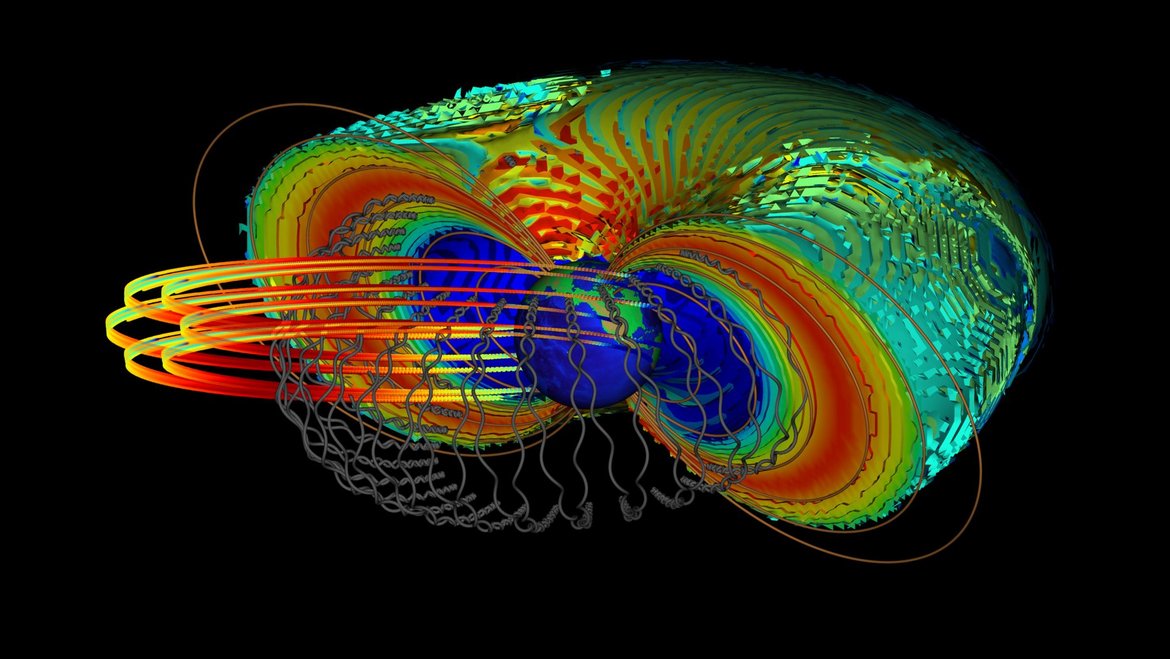
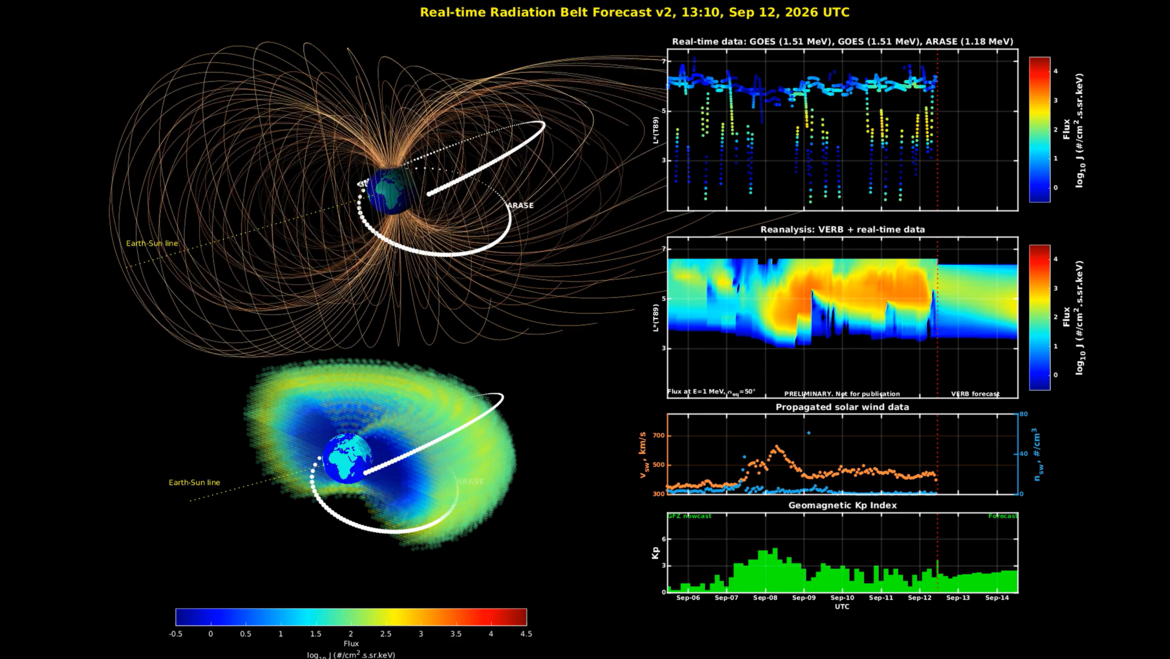
Projects to improve models of the radiation belt and solar activity:
- I - “Advancing Radiation Belt Modeling with Nonlinear Wave-Particle Interaction” (ARBEN) by Dr. Miroslav Hanzelka, from Section 1.5 Space Physics and Space Weather, supervised by Dr. Deodong Wang, as well as:
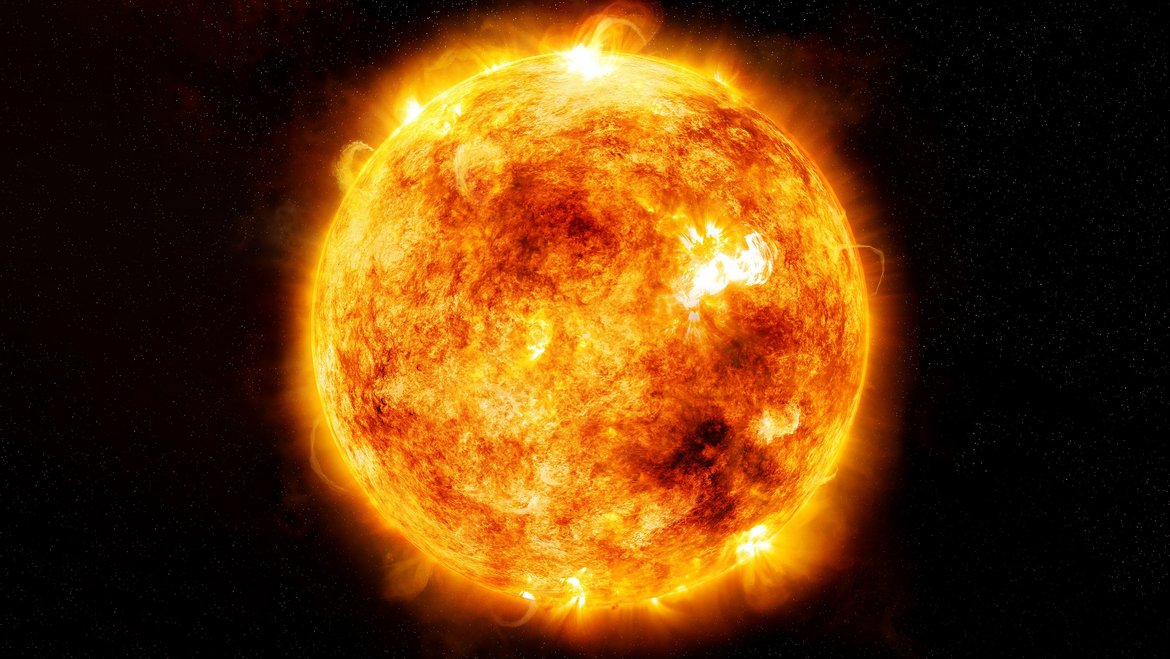
II - „Intelligent analysis of solar activity for space weather forecasting“ (SOFIA) by Ekaterina Dineva, from Section 1.5, supervised by Prof. Yuri Sphrits.
The two research projects in the MSCA-2025 grant program focus on innovative research approaches to make space weather forecasts even more accurate. Reliable space weather forecasts are a crucial prerequisite for protecting technical infrastructure—particularly satellites, navigation and communication systems, as well as aviation and power grids—and ensuring their continuous operation. Developing these models is a highly complex undertaking and requires ongoing research.
ARBEN | Advancing Radiation Belt Modeling with Nonlinear Wave-Particle Interactions
As part of the ARBEN project, a physically grounded correction model is being developed that systematically incorporates nonlinear wave-particle interactions into radiation belt models. Understanding and predicting the behavior of high-energy electrons in Earth’s radiation belts is essential for protecting space-based infrastructure from geomagnetic storms. The project leader, Dr. Miroslav Hanzelka, is a space physicist who previously conducted research as a Postdoctoral Humboldt Fellow in Section 1.5 “Space Physics and Space Weather” at the GFZ until October 2025. Prior to that, his research took him to the Center for Space Physics at the renowned Boston University (USA) for one year. He is currently based at the Institute of Atmospheric Physics of the Czech Academy of Sciences. He is planning to begin his his project at the GFZ towards the end of the year.
SOFIA | Intelligent analysis of solar activity for space weather forecasting
This project aims to improve the prediction of solar activity using advanced machine learning methods. By combining physics-based and data-driven approaches, the SOFIA project will lay the groundwork for more accurate, reliable, and practical space weather forecasts. The project leader, Dr. Ekaterina Dineva, earned her Ph.D. in 2021 at the Leibniz Institute for Astrophysics Potsdam (AIP) with a dissertation titled “Sun-as-a-Star-Spectroscopy Using the Potsdam Echelle Polarimetric and Spectroscopic Instrument (PEPSI).” After two years as a postdoc at the AIP, the solar physicist is now conducting research at the Center for Mathematical Plasma Astrophysics at KU Leuven. She will begin working at the GFZ in December.
The following additional projects were additionally approved for funding* from Brandenburg state funds
III - „Unterstanding Energetic Particle Effects from near-Earth space to the lower atmosphere“ (EPPECT) by Dr.Xingzhi Lyu, from Section 1.5, supervised by Prof. Yuri Sphrits, and:
IV - „Revolutionising ocean climate monitoring through space-based magnetometry and Artificial Intelligence“ (PHOENIX) by Dr. Rafael Rigaud do Amaral, from Section 1.3 Earth System Modelling, supervised by Dr. Jan Saynisch-Wagner.
(V - Quaternary Glacial Fluctuations and Intracontinental Mountain Building in the Central Tian Shan“ (Q-GIMB-CTS) by Dr. Feng Li, from Section 3.2 Organic Geochemistry.)
EPPECT – Understanding Energetic Particle EffeCTs from near-Earth space to the lower atmosphere
The EPPECT project investigates how high-energy protons, which escape from the Earth’s ring current during geomagnetic storms, affect the upper atmosphere and climate-related processes. The project combines observations from multiple satellites with physical models to track the escape of high-energy protons and thereby quantify both the causes and the effects on the atmosphere. Dr. Xingzhi Lyu is a physicist in Section 1.5, Space Physics and Space Weather, at the GFZ, where she is a member of the research group on plasma waves and wave-particle interactions. In 2024, she completed her dissertation on modeling the dynamics of electrons in the radiation belts and protons in the ring current at West Virginia University.
PHOENIX – Revolutionising ocean climate monitoring through space-based magnetometry and Artificial Intelligence
The PHOENIX project will develop a basic framework for determining fluctuations in ocean heat content (OHC) using electromagnetic tidal fields (EM fields). By combining advanced modeling with machine learning, the project demonstrates how magnetic satellite data can be converted into reliable OHC indicators. This approach will open up new avenues for global climate monitoring and strengthen the links between geophysics and climate science. The project leader, Dr. Rafael Rigaud do Amaral is a geophysicist specializing in electromagnetic methods and numerical models. In 2024, he earned his Ph.D. from ETH Zurich with a dissertation titled “Regional Magnetotelluric Survey in Mongolia: Determination of the Properties and Structure of the Lithosphere”. He started working on PHOENIX at the GFZ on October 1st.
Q-GIMB-CTS - Tectonic Responses to Quaternary Glacier Fluctuations in the Central Tian Shan
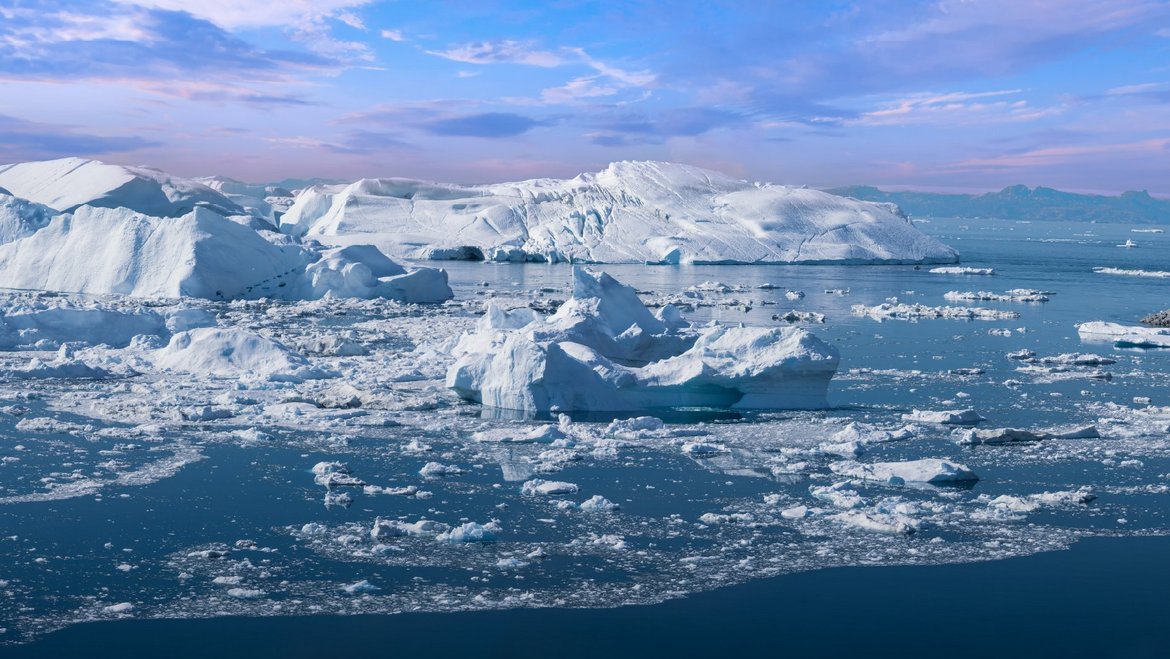
Fellowship recipient Dr. Feng Li, began an Alexander von Humboldt Fellowship in March 2026 and decided to continue it, even though he had also been nominated for the MSCA-2025-PF and would have received an EU fellowship. Dr. Feng Li’s research focuses on glacier and mountain formation. His project, “Quaternary Glacial Fluctuations and Intracontinental Mountain Building in the Central Tian Shan” (Q-GIMB-CTS), is supervised by Prof. Dirk Scherler from Section 3.2 Organic Geochemistry.
++++++++++++++++++++++++++++++++++++
Why the additional approvals?
The State of Brandenburg (MWFK) returned unused ERDF funds from 2025 to the EU and reached an agreement with the EU that these funds would be reallocated to provide funding for several additional Brandenburg MSCA-PF proposals. The proposals were not re-evaluated but were considered in the order determined by the ranking from the EU evaluation. As a result, a total of 9 additional fellowships were awarded in Brandenburg, three of which went to the GFZ.


![[Translate to English:] Veranschaulichung der Veranstaltung.](/fileadmin/_processed_/c/5/csm_20260928_Kachel_37c583cb50.webp)


![[Translate to English:] Alle Länder Afrikas gelistet mit relativem Malariarisiko](/fileadmin/_processed_/1/b/csm_2026-08-20-L%C3%A4nderliste_Malariarisiko_web_d547ebb81d.webp "[Translate to English:]")


![[Translate to English:] Bewaldetes Gebiet mit historischen Gebäuden](/fileadmin/_processed_/5/e/csm_Telegrafenberg-2021_300dpi_Marcel-Ludwig-GFZ_web_70a5c15a88.webp "[Translate to English:]")


![[Translate to English:] Karte](/fileadmin/_processed_/4/8/csm_20260625-0945b_Venezuela_Nachbeben_-c-EarthquakeExplorer-GFZ_04f208410a.webp)


