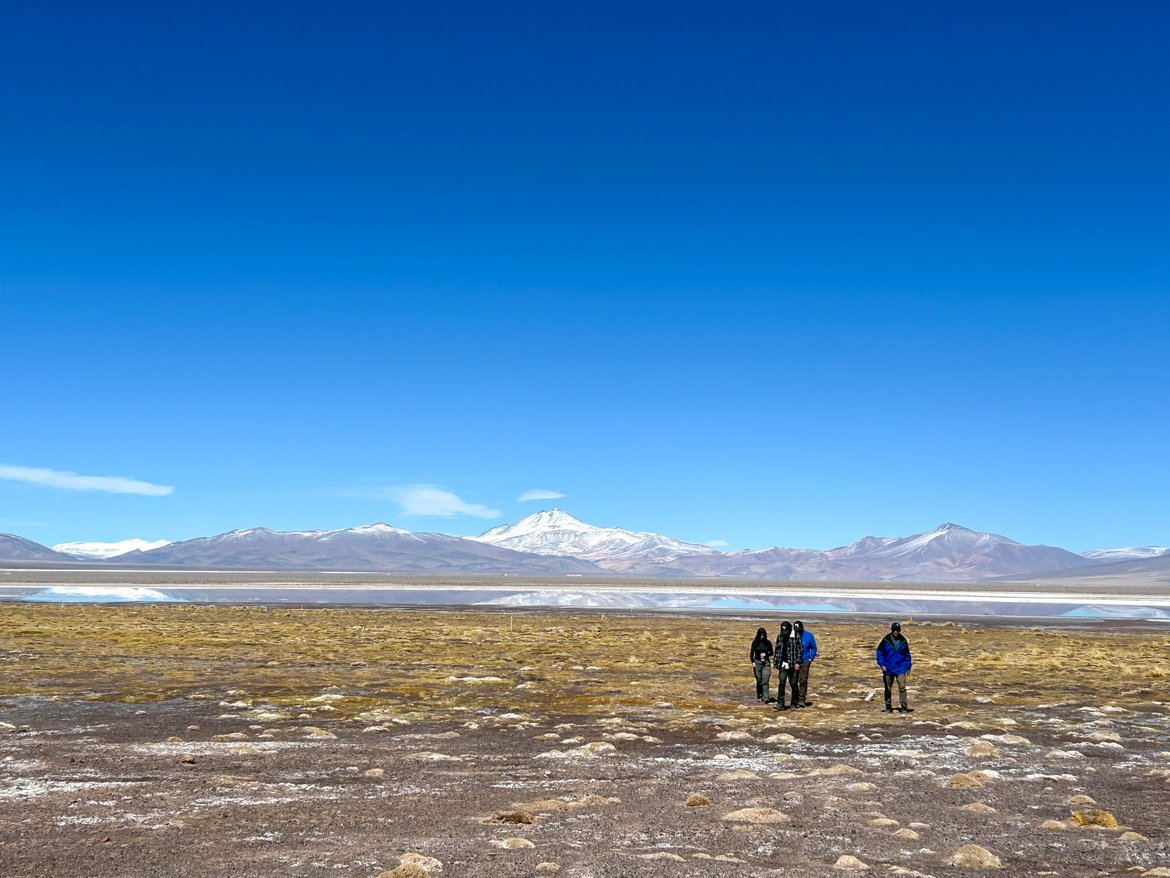
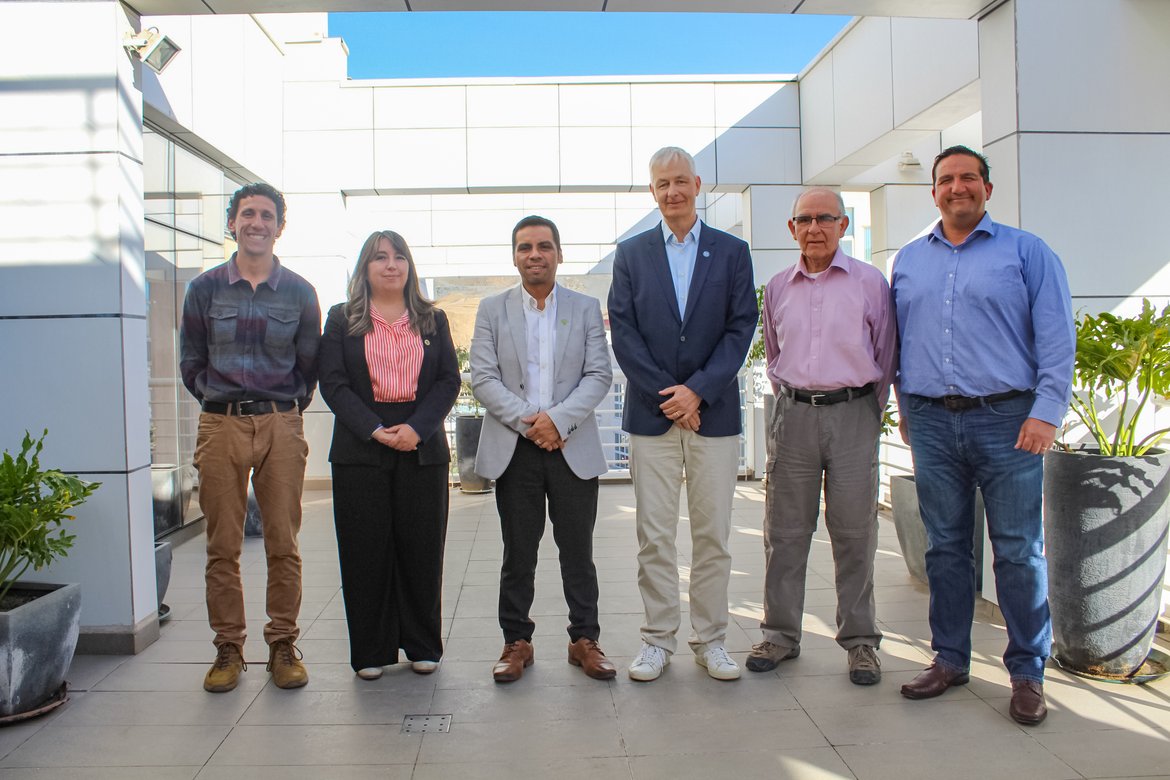
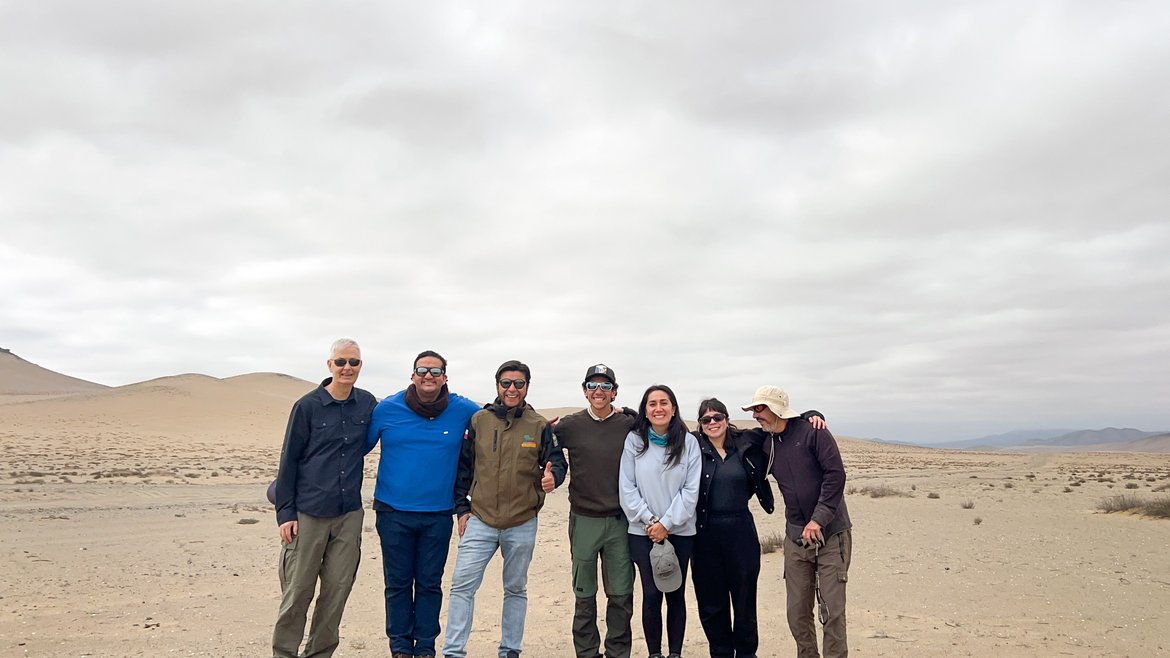
For ten years now, the GFZ Helmholtz Centre for Geosciences in Potsdam and the University of Atacama have been engaged in a close scientific collaboration. Under the leadership of Prof. Dirk Wagner (GFZ) and Prof. Rómulo Oses (University of Atacama), significant progress has been made in understanding the interactions between microorganisms and geological processes.
The collaboration began in 2016 as part of the DFG Priority Programme EarthShape – Earth Surface Shaping by Biota. The joint research focuses on investigating the influence of microorganisms on soil formation and stabilization. Initially, the studies concentrated on a unique climate and vegetation gradient along the Chilean Coastal Cordillera. Over time, the research has been successfully extended into the high-altitude regions of the Atacama.
The findings demonstrate how microorganisms fundamentally influence soil development processes. In particular, microbial communities have been shown to play a key role in the formation of stable soil structures, with their activity varying significantly along climatic gradients. Further studies reveal how the composition and function of soil microorganisms adapt to different environmental conditions, thereby shaping ecosystem development.
Over the course of the collaboration, four joint field campaigns have been conducted in the Atacama region, numerous scientific exchange activities have been organized, and around 20 peer-reviewed publications have been published. In addition, three PhD students - two from Chile and one from Germany - have successfully completed their doctorates within the framework of the collaboration, two of them with highest distinction.
“The combination of unique natural laboratory conditions in the Atacama Desert and close international collaboration has enabled us to gain new insights into fundamental processes of soil formation,” says Dirk Wagner. Rómulo Oses also emphasizes the importance of the partnership: “This collaboration has not only generated scientific knowledge but has also made a lasting contribution to the training of early-career researchers.”
Looking ahead, both partners plan to further expand their cooperation. Future activities will focus on new joint research projects, increased exchange of early-career scientists, and their training in the GeoBioLab. In addition, a joint course on geo-bio interactions is planned at the University of Atacama.
This ten-year collaboration stands as a strong example of successful international cooperation in the geosciences and provides a foundation for further innovative research in one of the most extreme environments on Earth.


![[Translate to English:] Alle Länder Afrikas gelistet mit relativem Malariarisiko](/fileadmin/_processed_/1/b/csm_2026-08-20-L%C3%A4nderliste_Malariarisiko_web_d547ebb81d.webp "[Translate to English:]")


![[Translate to English:] Bewaldetes Gebiet mit historischen Gebäuden](/fileadmin/_processed_/5/e/csm_Telegrafenberg-2021_300dpi_Marcel-Ludwig-GFZ_web_70a5c15a88.webp "[Translate to English:]")


![[Translate to English:] Karte](/fileadmin/_processed_/4/8/csm_20260625-0945b_Venezuela_Nachbeben_-c-EarthquakeExplorer-GFZ_04f208410a.webp)


