
Summary
The Tromm region in the Odenwald (South Hesse) meets the geological requirements for an underground research laboratory for geothermal energy. This is demonstrated by the results of an intensive investigation of the subsurface carried out by researchers from the Karlsruhe Institute of Technology (KIT), the GFZ Helmholtz Centre for Geosciences and the Helmholtz Centre for Environmental Research (UFZ) as part of the GeoLaB project. On this basis, concrete planning and the approval phase for the rock laboratory are now beginning. The laboratory is intended to advance the use of deep geothermal energy as a reliable energy source.
Background: Helmholtz project GeoLaB – an underground rock laboratory
In future, geothermal energy could make a significant contribution to a renewable and secure heat supply in Germany as a domestic and low-carbon energy source. Crystalline rock at great depths has by far the greatest energy potential. “Harnessing deep geothermal energy can make a decisive contribution to long-term stable consumer prices and to greater resilience and geostrategic independence in our energy supply,” says Prof. Ingo Sass, spokesperson for the GeoLaB Science Group, Head of the Geoenergy Section at the GFZ and Professor of Applied Geothermal Energy at TU Darmstadt.
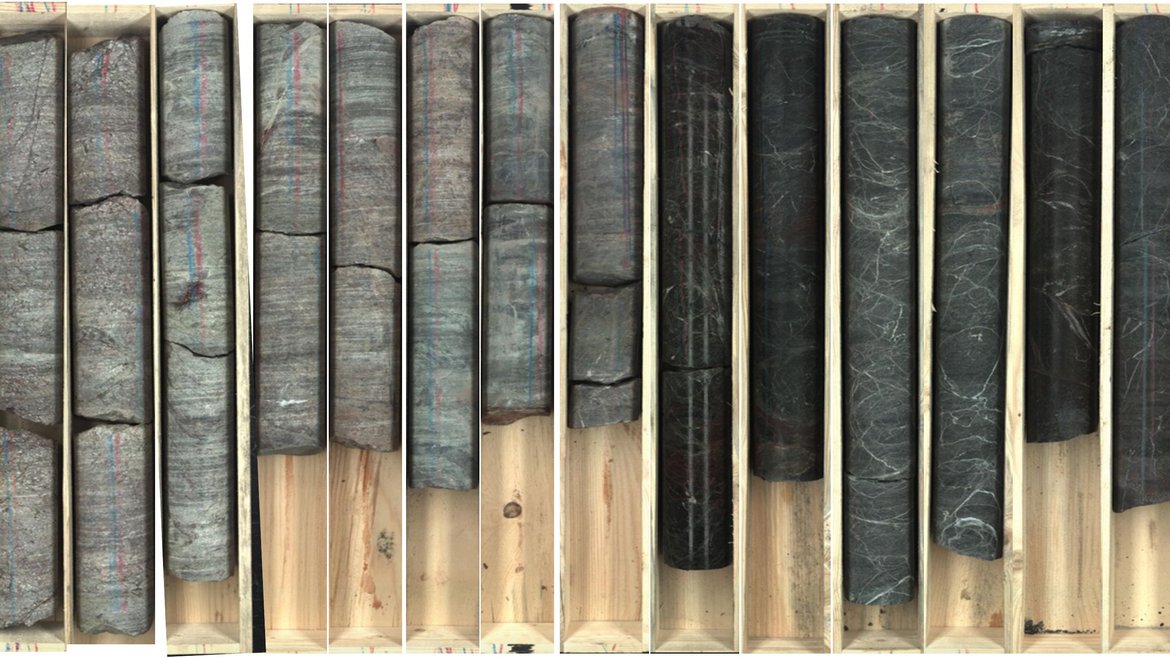
Researchers from the Helmholtz Association aim to investigate how geothermal energy from deep crystalline rock can be safely and efficiently harnessed in the future using an underground rock laboratory. A key prerequisite for its construction has now been met within the GeoLaB research project (which stands for: Geothermal Laboratory in the Crystalline Basement): the project partners KIT, GFZ and UFZ have confirmed the suitability of the subsurface in the Tromm region. “We have found the right geological conditions for our project in the Odenwald,” says project leader Dr Bastian Rudolph from the Institute of Applied Geosciences (AGW) at KIT. “This is an important milestone for the GeoLaB project.”
Favourable underground conditions
The assessment was based on extensive investigations carried out during the exploration phase, which has now been completed. These included, among other things, two exploratory boreholes with core sampling and accompanying measurement programmes, two seismic campaigns led by the GFZ using the Vibro-Truck, and a digital twin developed by the UFZ, which maps the subsurface in three dimensions and serves as a basis for analysis and planning.
The results show that the subsurface in the Odenwald offers favourable conditions for geothermal research. “Broadly speaking, we can distinguish three zones: the granite in the upper section is fairly uniform in structure, but at the same time exhibits sufficient fractures and variations. Beneath a transition zone lies metamorphic rock such as gneiss,” explains Professor Thomas Kohl from the AGW and coordinator of GeoLaB. “So here we find clearly defined geological conditions, but also a complexity typical of Europe’s crystalline reservoirs.” With an on-site rock laboratory, questions of reservoir technology can therefore be investigated in a relevant environment under controlled conditions, and the insights gained can be applied to geothermally viable sites across Europe.
Rock laboratory now being planned in detail
With the conclusion of the exploration phase, detailed planning of the rock laboratory is now beginning, followed by an extensive approval process. Those involved are seeking a precise location for the access tunnel and planning the surface and underground infrastructure, adapted to local conditions. “To this end, we are planning further exploratory drilling and three-dimensional geophysical surveys,” says Prof. Ingo Sass, spokesperson for the GeoLaB Science Group from GFZ. “We are planning all works in such a way that the impact on people and nature remains as low as possible. We are continuing the large-scale monitoring programme already underway to protect drinking water and groundwater.”
About GeoLaB
GeoLaB is a key project for the future use of geothermal energy to ensure a secure energy supply in Europe. Much of this heat is stored in deep, hot, crystalline rock, which represents an energy resource that has hardly been utilised to date but is of strategic value. GeoLaB aims to establish an underground rock laboratory to investigate in situ how this heat source can be sustainably exploited. Furthermore, GeoLaB is intended to offer a wide range of training opportunities for early-career researchers. There are no plans to promote geothermal energy on-site. GeoLaB is a strategic expansion investment by the Helmholtz Association and has started in 2022.
(This press release has also been issued in a similar form by KIT.)
Further information:
https://geolab.helmholtz.de/en/
Interviews with researchers from the GeoLaB exploration phase:
https://geolab.helmholtz.de/forschung/inside-geolab
Public event in Rimbach on 12 May, 6.30 pm
On 12 May 2026, a public event will take place to provide information and facilitate discussion on the status of the project. Interested members of the public will receive information on the next steps for GeoLaB, as well as on geothermal energy and the various monitoring activities within the framework of GeoLaB.
Venue: Martin Luther School in Rimbach
Start of the event with presentations and Q&A sessions: 7.00 pm.
Between 6.30 pm and 7.00 pm, as well as following the presentations and discussion, there will be an opportunity to speak with the GeoLaB team at various information stands.


![[Translate to English:] Alle Länder Afrikas gelistet mit relativem Malariarisiko](/fileadmin/_processed_/1/b/csm_2026-08-20-L%C3%A4nderliste_Malariarisiko_web_d547ebb81d.webp "[Translate to English:]")


![[Translate to English:] Bewaldetes Gebiet mit historischen Gebäuden](/fileadmin/_processed_/5/e/csm_Telegrafenberg-2021_300dpi_Marcel-Ludwig-GFZ_web_70a5c15a88.webp "[Translate to English:]")


![[Translate to English:] Karte](/fileadmin/_processed_/4/8/csm_20260625-0945b_Venezuela_Nachbeben_-c-EarthquakeExplorer-GFZ_04f208410a.webp)


