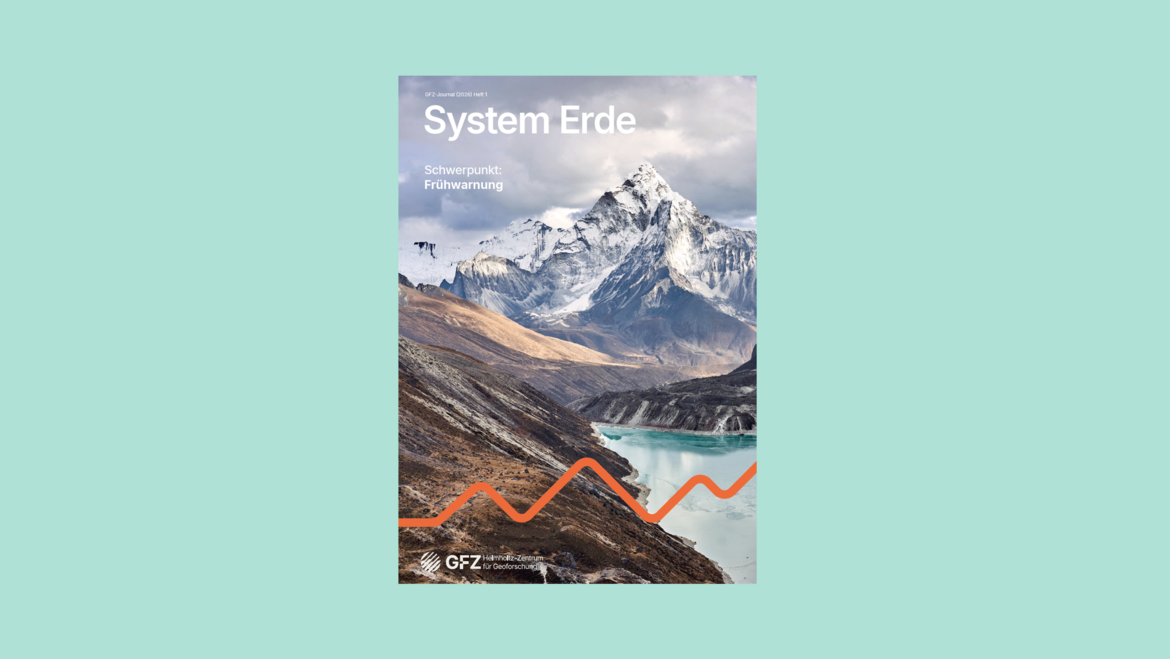
"Earthquakes are among the deadliest natural hazards. They can reduce houses to ruins in seconds, destroy decades of progress, and claim thousands of lives." This was stated by UN Secretary-General António Guterres on the occasion of the first World Day for Earthquake Victims, observed on April 29, 2026, and intended to commemorate the victims every year. Guterres added: "Earthquakes are inevitable, but the destruction they cause does not have to be."
For us at the GFZ Helmholtz Centre for Geosciences, this new international day of remembrance is significant in several respects. Firstly, numerous colleagues conduct research on earthquakes and resulting hazard events like tsunamis. We also work on earthquake-resistant construction and early warning systems. Secondly, it is precisely these researchers who step forward in the event of a disaster to explain the geological background. This is a significant personal challenge, given the high number of casualties.
The importance of earthquakes, volcanism, and tsunamis to us is reflected in the number of contributions dedicated to the topic of early warning in this issue of the journal "System Erde" (System Earth).
Other risks we address in this issue are flash floods and river floods. Climate change plays a role here, exacerbating a range of risks – whether through melting glaciers and thawing permafrost in high mountain regions or through extreme weather events. Space weather, in the form of radiation and charged particles from the sun, can also threaten our high-tech society.
For almost all of these risks, the same applies as for earthquakes: the natural events themselves are inevitable, but they often only become disasters due to insufficient or delayed preparation and a lack of alternatives for living and working. This, in turn, can be turned into a positive: with our work, we contribute to "awareness," we develop and improve warning systems, or we deliver crucial data and components for them. Geosciences save lives and mitigate damage.
This and all previously published issues of System Erde are permanently available online: systemerde.gfz.de


![[Translate to English:] Alle Länder Afrikas gelistet mit relativem Malariarisiko](/fileadmin/_processed_/1/b/csm_2026-08-20-L%C3%A4nderliste_Malariarisiko_web_d547ebb81d.webp "[Translate to English:]")


![[Translate to English:] Bewaldetes Gebiet mit historischen Gebäuden](/fileadmin/_processed_/5/e/csm_Telegrafenberg-2021_300dpi_Marcel-Ludwig-GFZ_web_70a5c15a88.webp "[Translate to English:]")


![[Translate to English:] Karte](/fileadmin/_processed_/4/8/csm_20260625-0945b_Venezuela_Nachbeben_-c-EarthquakeExplorer-GFZ_04f208410a.webp)


