Summary
The EU has set itself the goal of becoming climate neutral by 2050. To achieve this, it is not enough to drastically reduce CO2 emissions; CO2 must also be removed from the atmosphere. To this end, the RESET project has been launched at the GFZ Helmholtz Centre for Geosciences. Geoscientists are working with colleagues from the RIFS Research Institute for Sustainability | at the GFZ to investigate how Enhanced Weathering of silicate rock can permanently remove CO2 from the atmosphere. The fundamental idea is simple and takes advantage of natural processes that occur on the Earth’s surface since billions of years: rock flour is spread on arable land, where it weathers and reacts with CO2, enters the ocean via the natural water cycle and is stored there long-term, e.g. as limestone. There is still a lack of reliable data on the effectiveness, environmental impact and societal implications of this approach. The RESET project (“Developing Roadmaps to Scalable Carbon Dioxide Removal by Enhanced Silicate Weathering”) aims to close these gaps. The project is funded by the Federal Ministry of Research, Technology and Space (BMFTR) with 1.4 million euros over a period of three years as part of the CDRterra-II initiative, a research programme on land-based CO2 removal methods.
Background: The need to create carbon sinks
The EU wants to become climate neutral by 2050, i.e. achieve net-zero greenhouse gas emissions. Even though drastically reducing greenhouse gas emissions is a top priority, this alone is not enough: there are certain industries and processes that will continue to emit CO2 despite all reduction efforts – at least until certain technical processes can be decarbonised. These include, for example, cement production, air travel and some land-use changes, for example in agriculture. Therefore, additional and permanent removal of CO2 from the atmosphere is necessary. For Germany, this amounts to approximately 100 million tonnes per year from 2050 onwards.
The approach: accelerated silicate weathering on a large scale
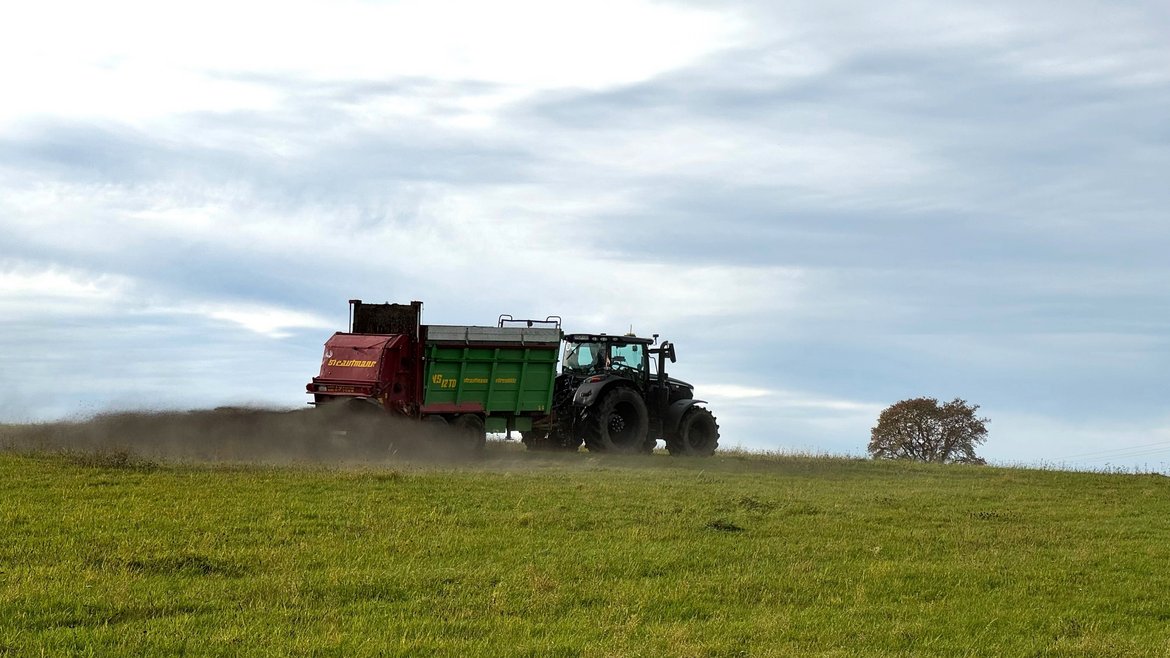
In order to permanently remove CO2 from the atmosphere, the GFZ Helmholtz Centre for Geosciences is investigating a relatively new approach in its newly launched RESET project. It is not based on technical innovations, but relies on a natural process that has been continuously removing CO2 from the atmosphere for billions of years: the weathering of silicate rock. The approach aims to artificially enhance this natural process. To this end, finely ground rock flour is spread on agricultural land. There it reacts with CO2, which is then transported into the oceans in the form of dissolved carbonates and ultimately bound there in the long term as limestone. This Enhanced Silicate Weathering (ESW) has the potential to remove large amounts of CO2 from the atmosphere – also referred to as “CDR – Carbon Dioxide Removal” – and store it in the ocean for millennia. Compared to technological methods, ESW is likely cost-effective and may have substantial positive side-effects for crop health and yield. In addition, rock flour is produced anyway, for example, when basalt is mined for the construction industry.
Potential and research questions
Models predict that ESW alone could more than achieve the CDR targets of the German Climate Protection Act if all agricultural land were used for this purpose. However, there is currently no clear and reliable empirical basis for how much CO2 this process can store under natural conditions. Preliminary studies on this approach have already been conducted, both in the laboratory and on agricultural land, but they have only been running for a few years. A key problem is that the timescales of the chemical processes taking place in natural soil ecosystems are significantly longer than the series of experiments that have been running so far.
This in turn means that the actual feasibility of Enhanced Silicate Weathering on a large scale has not yet been demonstrated. In addition, there is a lack of strategies for monitoring and precisely quantifying the carbon actually removed from the atmosphere. Furthermore, the long-term effects on the entire soil ecosystem are unknown, and the influence of rock flour on soil carbon or humus formation has not been clearly established. Last but not least, there is a lack of knowledge about the framework conditions and limits of practical feasibility, which result, for example, from interactions with soil humus, and also depend on the willingness of farmers and policymakers to implement ESW.
Research approach at GFZ with RIFS: geo-research hand in hand with transformative sustainability research
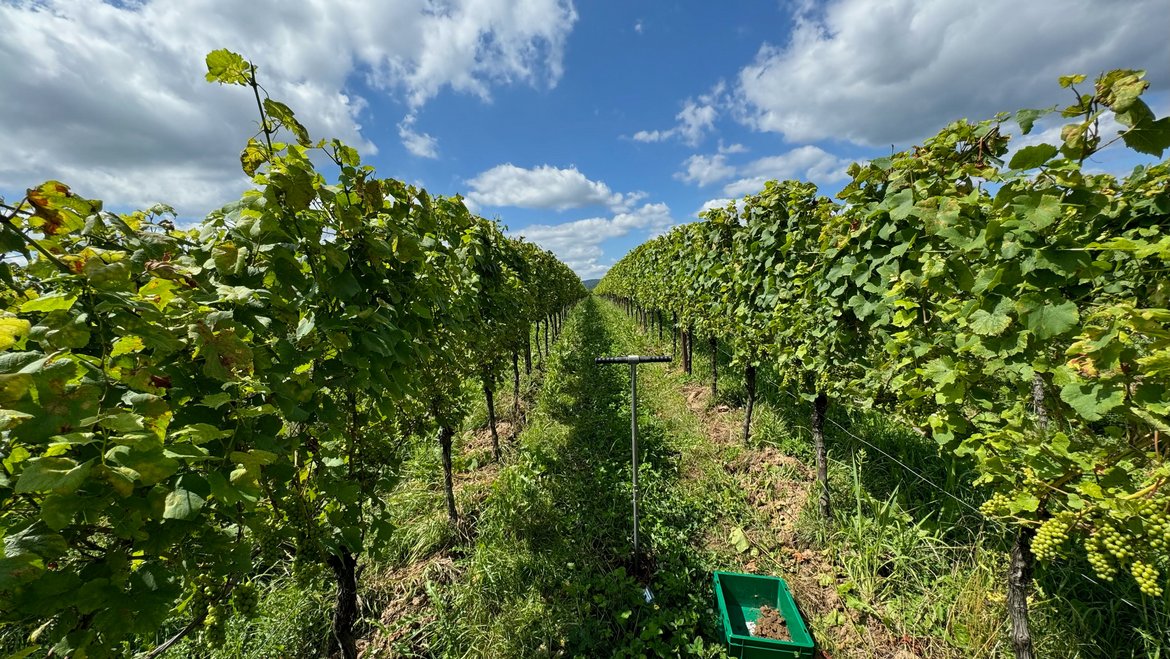
The RESET project systematically addresses these knowledge gaps. Specifically, novel organic and inorganic geochemical isotope proxies are being developed – based on well-characterised and long-term (20-30 years) experiments. These allow the quantification of CO2 uptake – as the bicarbonates delivered to the ocean, and also in soil humus –. The geoscientific findings are linked to a social science analysis. This examines the social implications of ESW in order to assess the causal relationships as well as the systemic effects, drivers and barriers of ESW for scalable and sustainable implementation.
“With this project, we are exploiting the newly created synergies between the GFZ and the RIFS Research Institute for Sustainability by combining natural science and social science research approaches for a societally relevant topic,” explains project leader Dr Patrick Frings, working group leader in GFZ Section 3.2 “Organic and Earth Surface Geochemistry”.
Principal investigators (PIs)
Dr Patrick Frings
Working Group Leader
Section 3.2 Organic and Earth Surface Geochemistry
GFZ Helmholtz Centre for Geosciences
Research topic in the project:
Development of geochemical proxies for ESW
Prof. Dr Dirk Sachse
Head of the Organic Surface Geochemistry Lab
Section 4.6 Geomorphology
GFZ Helmholtz Centre for Geosciences
Research topic in the project:
The effect of ESW on organic soil carbon
Dr Pia-Johanna Schweizer
Research Group Leader “Systemic Risks”
RIFS Research Institute for Sustainability at GFZ
Research topic in the project:
Social implications of ESW


![[Translate to English:] Alle Länder Afrikas gelistet mit relativem Malariarisiko](/fileadmin/_processed_/1/b/csm_2026-08-20-L%C3%A4nderliste_Malariarisiko_web_d547ebb81d.webp "[Translate to English:]")


![[Translate to English:] Bewaldetes Gebiet mit historischen Gebäuden](/fileadmin/_processed_/5/e/csm_Telegrafenberg-2021_300dpi_Marcel-Ludwig-GFZ_web_70a5c15a88.webp "[Translate to English:]")


![[Translate to English:] Karte](/fileadmin/_processed_/4/8/csm_20260625-0945b_Venezuela_Nachbeben_-c-EarthquakeExplorer-GFZ_04f208410a.webp)


